

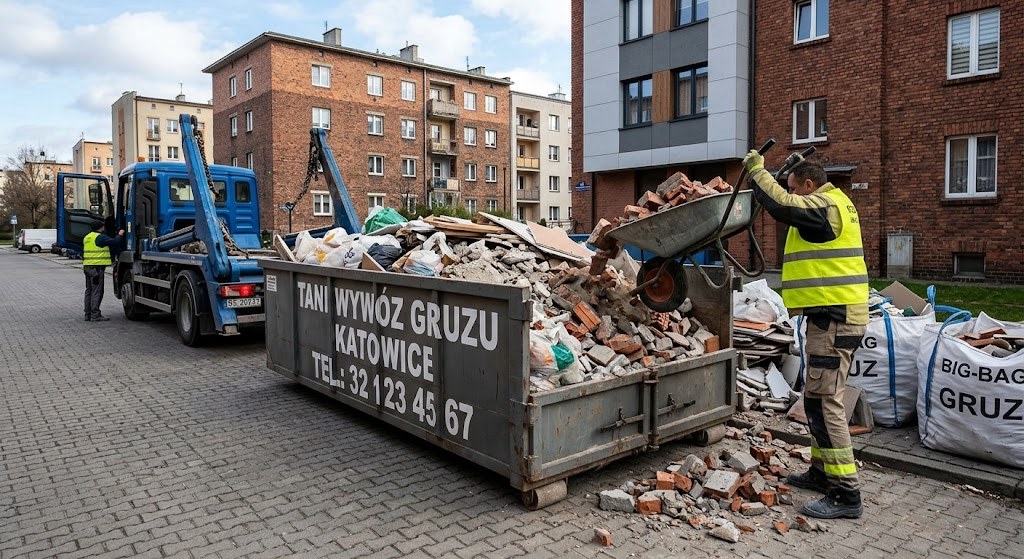
Construction and renovation projects often generate large quantities of rubble, broken bricks, concrete, tiles, plaster, and other unwanted materials. Whether you are renovating an apartment, improving a house, or managing a commercial construction project, removing this waste efficiently is essential for maintaining a clean and safe working environment. However, disposal expenses can quickly increase when the project is not properly planned.
For property owners and contractors in Katowice, finding an affordable waste removal service does not necessarily mean choosing the cheapest offer available. It means understanding the available options, selecting the right container, avoiding additional charges, and organizing collection at the appropriate time. With a practical approach, it is possible to manage construction waste responsibly without putting unnecessary pressure on your renovation budget.
The search term Tani wywóz gruzu Katowice is relevant to customers looking for economical rubble removal services in the city. Understanding the factors that influence prices can help customers make informed decisions and choose solutions that suit their individual requirements.
Why Affordable Rubble Removal Matters
Construction waste can become a significant expense during renovation work. Removing old bathroom tiles, dismantling walls, replacing flooring, or rebuilding a driveway may produce more debris than initially expected. If waste accumulates without a clear disposal plan, it can obstruct workers, reduce available space, and delay other activities.
Affordable rubble removal helps homeowners and contractors maintain better control over project expenses. It also makes it easier to keep construction sites organized and prepare properties for subsequent renovation stages.
However, affordability should always be considered alongside service quality and proper waste handling. An unsuitable container, unclear pricing, or an unreliable collection schedule may create additional expenses later.
The best approach is to compare services carefully and select a provider that offers transparent conditions, suitable equipment, and reliable transportation.
1. Choose the Right Container Size for Your Project
One of the simplest ways to control construction waste disposal costs is to select a container that matches the amount of rubble your project will generate.
Small renovation jobs, such as replacing bathroom tiles or removing a limited section of plaster, may require only a small container or an approved rubble collection alternative. Larger projects, including complete apartment renovations and extensive demolition work, usually generate more waste and may require a higher-capacity container.
Ordering a container that is too small can result in additional collection fees or the need to arrange a second delivery. On the other hand, paying for a container that is significantly larger than necessary may increase your initial expenses.
Before booking, estimate the approximate quantity of debris and discuss your requirements with the service provider. Explain the type of work being performed and whether additional waste will be generated during later stages.
Remember that container capacity involves both volume and weight. Concrete, bricks, and other dense materials can become extremely heavy even when the container is not completely full. Always follow the provider’s loading instructions and permitted weight limits.
Careful capacity planning is an important step toward finding Tani wywóz gruzu Katowice services that offer good value for money.
2. Separate Clean Rubble from Mixed Construction Waste
The composition of your waste can influence the disposal method and the total price. Clean rubble generally includes materials such as concrete, bricks, and certain types of masonry debris. Mixed construction waste may contain plasterboard, wood, plastic, packaging, insulation, and other renovation materials.
These waste categories may require different collection arrangements and processing methods. Mixing materials unnecessarily can make disposal more complicated and potentially increase costs.
Whenever practical, separate clean rubble from other construction debris before ordering a container. Ask the provider which materials are accepted and whether particular items require separate collection.
Do not assume that every construction material can be placed in the same container. Hazardous materials, certain insulation products, paints, chemicals, and other restricted waste may require specialized handling.
Proper separation makes it easier to choose the appropriate service and reduces the likelihood of unexpected charges caused by incorrect loading.
3. Compare Quotations Before Making a Booking
Prices can vary between waste removal companies, even when they offer apparently similar services. Comparing several quotations helps customers understand what is included and identify an option that suits their budget.
However, the lowest advertised price is not always the most economical choice. Some offers may include transportation, container rental, and waste processing, while others may charge separately for certain services.
When requesting quotations, provide each company with the same basic information. Explain the type of waste, estimated quantity, delivery address, required container size, and expected rental period.
Ask whether the quoted price includes:
Container delivery and collection.
Waste transportation and processing.
The standard rental period.
A permitted weight allowance.
Applicable taxes.
Any additional collection or handling charges.
You should also confirm the cost of extending the rental period or exceeding the agreed weight limit.
Obtaining written quotations makes it easier to compare the complete cost rather than relying on an initial estimate. This approach helps customers avoid misunderstandings and choose a service based on genuine value.
4. Plan Waste Collection Around Your Renovation Schedule
The length of time a container remains on-site can affect the overall cost of waste removal. Depending on the provider, the initial price may include a limited rental period, with additional charges applying if the container remains longer than agreed.
Renovation delays are common. Contractors may need extra time to complete demolition, materials may arrive late, or unexpected structural problems may interrupt the work.
Planning waste collection around the project schedule can help prevent unnecessary rental extensions.
Before arranging delivery, consider when the largest amount of rubble will be generated. If possible, schedule the container to arrive shortly before the main demolition or removal work begins.
Discuss the expected collection date with your provider and ask how much notice is required to arrange pickup.
For larger projects, several smaller collections may sometimes be more practical than keeping a container for an extended period. The most economical arrangement depends on the provider’s pricing structure and the volume of waste produced.
Good coordination keeps the construction area organized and helps control avoidable expenses.
5. Prepare the Container Placement Area
The location of a container can influence how efficiently it is delivered and collected. Difficult access, narrow entrances, limited parking, and obstacles around the property may complicate the process.
Before delivery, identify a suitable location with sufficient space for the container and the collection vehicle. Ensure that the agreed area is accessible and free from unnecessary obstructions.
If the container needs to be placed on a public road, pavement, or another public area, check whether permission or additional arrangements are required. Requirements may depend on the exact location and circumstances.
For apartment buildings, consult the property manager or building administrator when necessary. Shared access areas and parking spaces may be subject to specific rules.
Preparing the site in advance reduces the risk of failed delivery attempts, rescheduling, and additional handling costs.
6. Consider Alternatives for Small Quantities of Rubble
A large container is not always the most suitable option for a small renovation project. If you are replacing a few tiles, removing a small amount of plaster, or carrying out minor repairs, alternative collection arrangements may be more practical.
Depending on the quantity of waste, available services, and local requirements, suitable options may include approved rubble bags or municipal collection arrangements.
Residents should investigate the waste disposal services available through the City of Katowice and check the current eligibility conditions before making a booking. Municipal facilities may accept certain household renovation waste under specified rules, while quantities, material types, and delivery arrangements can be restricted.
Businesses and contractors should confirm whether a particular option is available for their type of project rather than assuming that household arrangements apply to commercial waste.
Comparing these alternatives with private container rental can help customers select an appropriate solution without paying for unnecessary capacity.
7. Reduce the Amount of Waste Generated
Waste disposal costs can also be reduced by managing materials more carefully before and during renovation work.
Although demolition waste cannot always be avoided, better planning can prevent unnecessary disposal.
For example, accurately measuring flooring and tiles before purchasing materials may reduce unused offcuts. Keeping usable bricks or other suitable materials separate may allow them to be reused where appropriate. Protecting materials during storage can also prevent damage that would otherwise create additional waste.
When removing old fittings, consider whether any items can be reused or donated, provided they remain safe and suitable for their intended purpose.
Reuse should never replace proper disposal when materials are damaged, contaminated, or unsuitable for further use. The objective is to minimize unnecessary waste while maintaining appropriate construction standards.
Reducing the total quantity of debris may allow you to use a smaller container or arrange fewer collections, depending on the project.
8. Check the Provider’s Reliability and Waste Handling Practices
Affordable pricing is important, but reliability should remain part of the decision-making process. A service that fails to collect waste on time can interrupt construction activities and create additional logistical problems.
Before booking, review the provider’s service conditions, customer feedback, collection arrangements, and accepted waste categories.
Confirm that the company can legally handle and transport the waste generated by your project. Ask where the materials will be taken and whether the quoted service includes appropriate processing or disposal.
Clear communication is especially important when dealing with mixed waste or materials that may require special treatment.
A dependable provider should explain the available options, loading requirements, weight limits, and potential additional charges before the container is delivered.
Choosing a reliable company helps customers avoid complications and ensures that affordability does not come at the expense of responsible waste management.
9. Common Mistakes That Increase Disposal Costs
Several avoidable mistakes can make construction waste removal more expensive than expected.
Ordering the wrong container size: An undersized container may require another collection, while excessive capacity can increase the initial cost.
Mixing incompatible materials: Incorrectly sorting waste may lead to additional charges or require alternative disposal arrangements.
Ignoring weight restrictions: Heavy rubble can exceed the permitted load before the container is completely full.
Extending the rental period unnecessarily: Delays in filling or clearing the container may result in extra rental fees.
Failing to check the complete quotation: Transportation, taxes, processing, and additional services may not always be included in the advertised price.
Leaving booking until the last minute: Limited availability can make it harder to arrange a collection that fits the project schedule.
Avoiding these mistakes helps homeowners and contractors maintain greater control over their renovation budgets.
Conclusion
Finding affordable construction waste removal in Katowice requires more than simply selecting the lowest advertised price. Customers should consider container capacity, waste composition, transportation, rental duration, site accessibility, and the services included in the quotation.
Anyone searching for Tani wywóz gruzu Katowice can benefit from comparing written offers, separating suitable waste categories, planning collections carefully, and checking available alternatives for smaller quantities of rubble.
Preparing the site before delivery and following the provider’s loading instructions can also prevent unnecessary complications. For minor renovations, approved rubble bags or eligible municipal services may be worth investigating, while larger projects may benefit from a professionally arranged container.
Ultimately, the most economical solution is one that matches the actual requirements of your project, provides transparent pricing, and ensures that construction waste is handled responsibly. With careful planning and a reliable collection service, you can maintain a cleaner worksite while keeping renovation expenses under control.
