

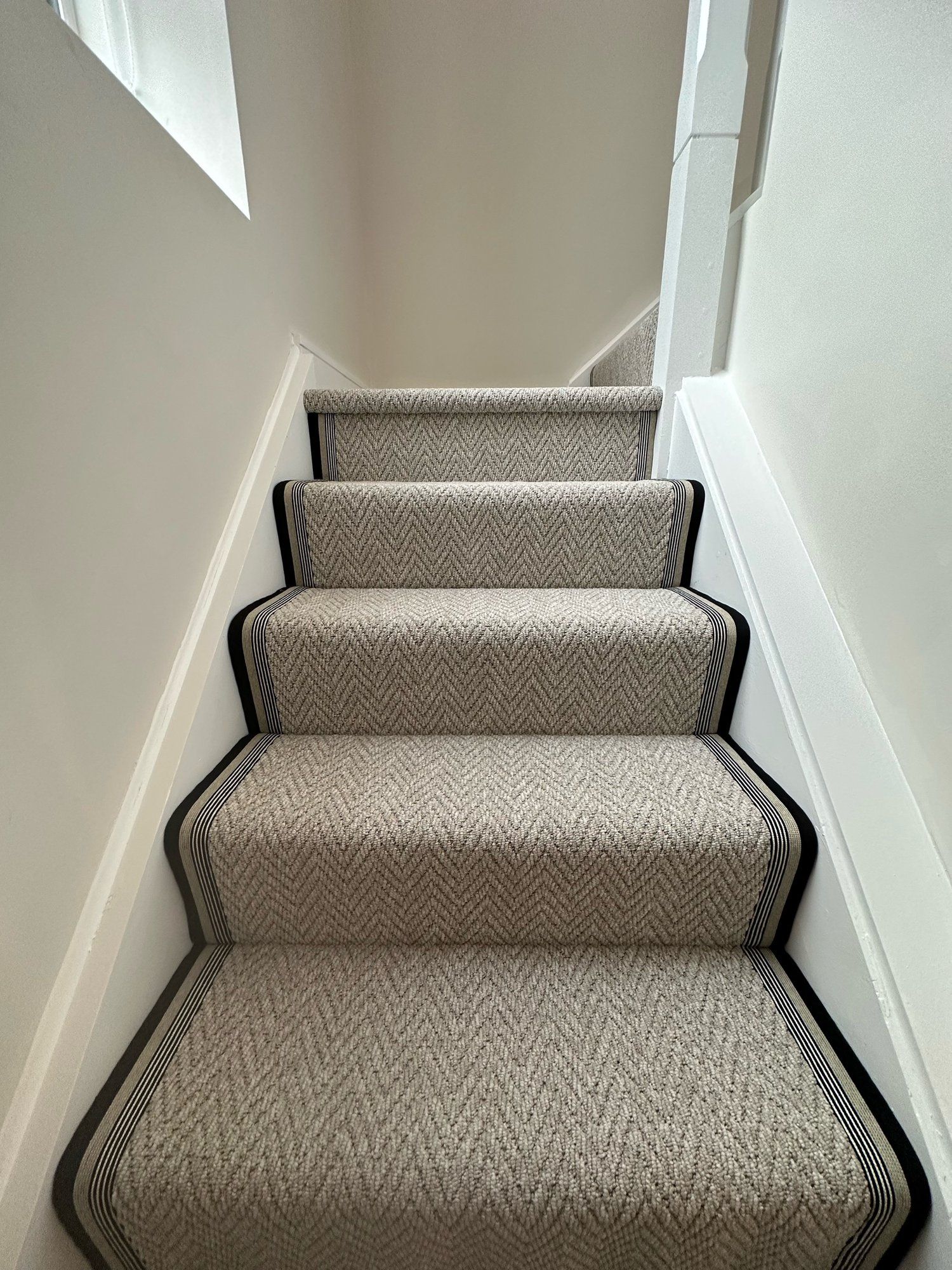
A Stair carpet runner is one of the simplest ways to make a staircase safer, quieter and better looking, and choosing the right one starts with understanding what it needs to do in your home. A Stair carpet runner covers the centre of each step, leaving the edges of the treads visible, which protects the wood or stone underneath while adding grip underfoot. Before you fall in love with a colour or pattern, think about who uses the stairs every day, how much traffic they carry, and whether pets or children are part of the picture. The right choice balances looks, durability and safety, and this guide walks you through each decision so the runner you buy fits your stairs and your life.
What a Stair Carpet Runner Actually Does
The first job of a Stair carpet runner is safety, because bare wooden or tiled steps can be slippery in socks or bare feet, especially for children and older family members. A Stair carpet runner adds friction to every step, which reduces slips and softens the impact if someone does stumble. The second job is protection: stairs take more wear than almost any other part of a home, and a runner takes the scuffs and scratches so the treads underneath stay in good condition. The third job is sound, since carpet absorbs the thud of footsteps that echoes through a house at night, and the fourth is style, because a well chosen runner turns a plain staircase into a feature of the home.
Measuring Your Stairs for a Stair Carpet Runner
Good measuring is the difference between a Stair carpet runner that looks tailored and one that looks like an afterthought, so take your time before ordering. A Stair carpet runner should leave a border of exposed tread on each side, usually around ten to fifteen centimetres, which frames the carpet and shows off the staircase itself. Measure the width of the narrowest tread, the depth of each step from nosing to riser, and the height of the risers, then add them up along the full flight, including any landing where the runner will turn or finish. Write every number down twice, because a runner cut too short cannot be stretched, and a runner cut too wide will bunch at the edges and wear unevenly.
Stairs are rarely a single straight flight, so a Stair carpet runner must be planned around landings, winders and turns as well as straight steps. A Stair carpet runner on a landing is usually mitred or folded at the corner so the pattern continues neatly, and this takes extra length that many first time buyers forget to allow. If your staircase has winders, where the treads narrow to a point on one side, the runner needs careful cutting and a skilled fitter to keep the edges straight and the pattern centred. Ask your supplier whether the price includes fitting on winders and landings, and always order a little extra length, because offcuts can be used for a matching doormat or a small landing piece.
Choosing the Right Material for Your Stair Carpet Runner
Material matters more on stairs than on a flat floor, because a Stair carpet runner takes concentrated wear on the nosing of every step. A Stair carpet runner in wool is the classic choice: wool is naturally springy, resists crushing, and hides dirt well, though it costs more than synthetic options. Nylon and polypropylene runners are tougher on a tight budget, resist stains, and suit busy family homes, but cheaper synthetics can flatten quickly under heavy traffic. Sisal and other natural fibres look beautiful and add texture, yet they can be slippery and hard to clean, so they suit low traffic stairs better. Whatever you choose, check the pile height, because a low, dense pile wears far better on stairs than a deep, soft one.
Colour and Pattern Choices for Your Stair Carpet Runner
Colour and pattern decide how a Stair carpet runner feels in your hallway, and the safest choice is one that works with the rest of your home rather than fighting it. A Stair carpet runner in a neutral tone, such as warm grey, oatmeal or soft charcoal, suits almost any decor and hides dust between cleans. A striped runner adds a classic touch and can make a narrow staircase feel wider, while a bold geometric pattern turns the stairs into a statement, though it shows fluff and footprints more readily. Dark colours hide marks but show dust, and pale colours show marks but brighten a dark hallway, so weigh your lighting and your tolerance for vacuuming before you decide.
Installation, Safety and Everyday Care
Fitting is not the place to cut corners, because a Stair carpet runner that moves underfoot is a trip hazard rather than a safety feature. A Stair carpet runner should be fixed with gripper rods or stair rods on every step, or glued and stapled by a professional fitter, so it stays tight against each tread and riser. Stair rods are the traditional finish, and they come in brass, chrome or black metal to match your banister and door handles, while a hidden fixing gives a cleaner, more modern look. After fitting, walk the stairs slowly and check that no edge lifts and no step feels loose, and ask the fitter to return if anything shifts in the first few weeks.
Once it is fitted, a Stair carpet runner needs only simple, regular care to stay looking good for years. A Stair carpet runner should be vacuumed at least twice a week, using a nozzle along the edges and the nosing where dust collects, and spills should be blotted at once rather than rubbed, which pushes stains deeper into the pile. Every year or so, give the runner a professional clean, and rotate any loose rugs at the top or bottom of the stairs so wear stays even. When you are ready to choose yours, browse the full range and order samples first at https://www.carpetshopdubai.com/stair-carpet.php so you can feel the quality and see the colours in your own hallway before you commit.
