

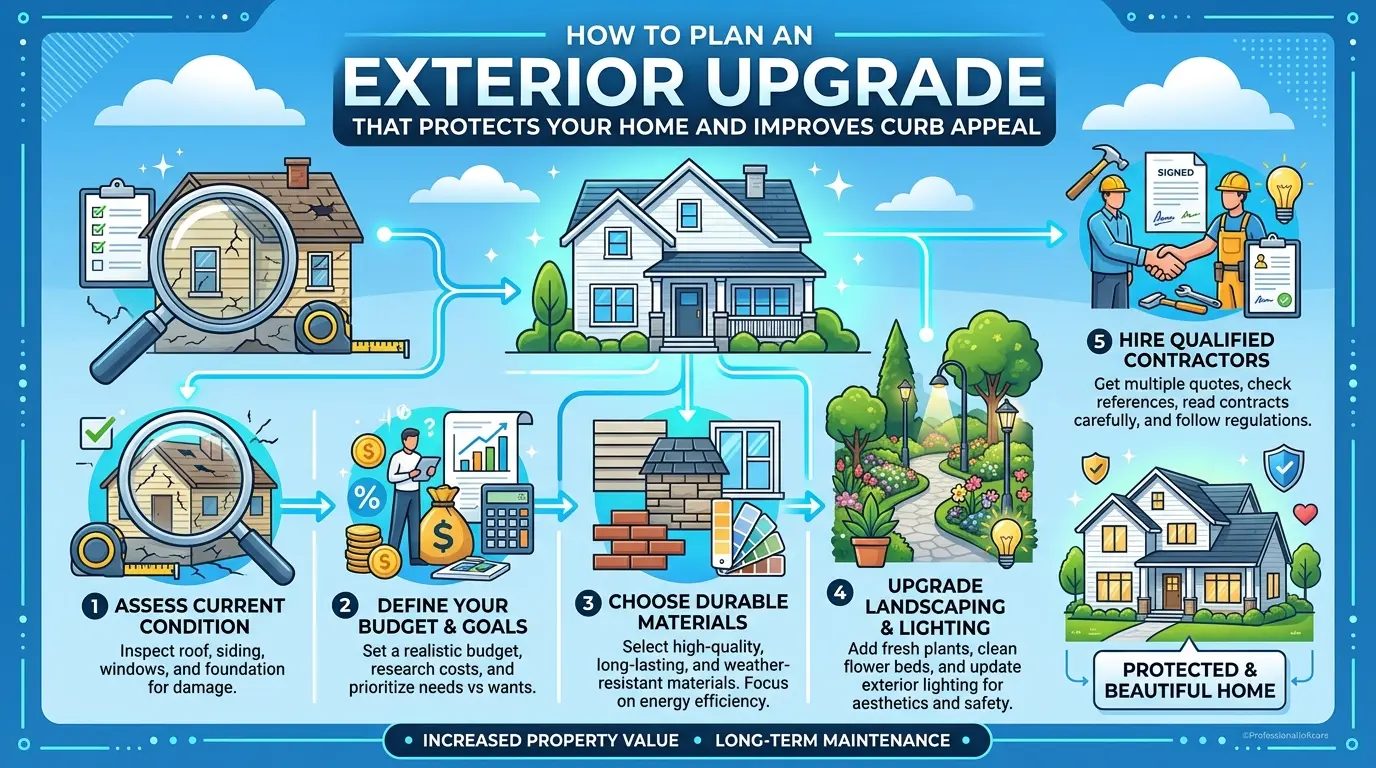
A home’s exterior is more than its first impression. Roofing, siding, gutters, trim, and paint all work together to protect the structure from weather, moisture, and everyday wear. When these elements are planned as one connected system, homeowners can make smarter upgrades that look better and last longer.
Think Beyond One Repair at a Time
Many exterior projects begin with a single issue: a leak, loose gutter, faded siding, or storm-damaged shingles. While it is natural to focus on the most obvious problem first, it helps to step back and look at the whole exterior.
A roof repair may reveal gutter issues. New siding may expose trim damage. Fresh paint may not last if moisture is trapped behind old materials. Viewing the exterior as a complete system can prevent mismatched repairs and wasted money.
Before starting any project, ask:
- Is this a cosmetic issue, a performance issue, or both?
- Are nearby materials also aging or damaged?
- Will this repair affect drainage, ventilation, or sealing?
- Could combining projects reduce disruption later?
- Does the upgrade fit the home’s long-term value?
This approach helps homeowners avoid patchwork decisions and create a cleaner, more durable result.
Start With the Roof
The roof is one of the most important protective layers on any home. It shields everything below it, including insulation, walls, ceilings, flooring, and personal belongings. If the roof is aging or damaged, other exterior upgrades may not perform as well as expected.
Common signs that a roof needs attention include missing shingles, curling edges, dark streaks, sagging areas, ceiling stains, or granules in gutters. Even if the roof appears fine from the ground, hidden issues around flashing, vents, valleys, and roof penetrations can create long-term moisture problems.
A roof inspection is often a practical first step before investing in siding, painting, or gutter work. It gives homeowners a clearer picture of what is urgent and what can be scheduled later.
Make Gutters Part of the Plan
Gutters are not just accessories. They move rainwater away from the roofline, walls, landscaping, and foundation. When gutters are clogged, undersized, leaking, or poorly pitched, water can spill over and damage fascia, siding, soil, and basement or crawlspace areas.
A good gutter system should:
- Drain smoothly without overflow
- Stay securely attached to the fascia
- Direct water away from the home
- Match the roofline and exterior style
- Be easy to maintain season after season
If you are replacing a roof or updating siding, it is worth checking whether the gutters should be repaired or replaced at the same time. Coordinating these projects can create a cleaner finish and better long-term performance.
Choose Siding and Paint With Durability in Mind
Siding and paint play a major role in curb appeal, but they also protect the walls beneath them. Cracks, gaps, loose panels, peeling paint, and soft trim can allow moisture to reach areas that should remain dry.
When choosing siding or exterior finishes, homeowners should consider more than color. Material durability, maintenance needs, local weather, insulation value, and installation quality all matter.
Practical Design Tips
For a balanced exterior, keep the overall style of the home in mind. A bold color may look appealing on a sample but feel overwhelming across the entire house. Neutral siding with accent trim, shutters, or a contrasting front door can create a timeless look without feeling plain.
Texture matters too. Mixing materials, such as siding with stone accents or painted trim, can add depth. The key is to keep the design cohesive rather than crowded.
Plan Around Local Weather
Every region creates different exterior challenges. Homes exposed to humidity, heavy rain, strong sun, or seasonal storms need materials and installation methods that match those conditions.
For example, moisture control is especially important in areas with frequent rain. Proper flashing, drainage, ventilation, and sealing can make a significant difference in how well the exterior performs. In storm-prone areas, homeowners may also want to ask about impact resistance, wind performance, and inspection routines after severe weather.
A local contractor can help identify which materials and installation details make sense for the climate. For homeowners researching exterior services, project planning, and roofing-related considerations, you can read more here to get a better sense of how professional exterior work is approached.
Budget for Value, Not Just Price
Exterior upgrades are a significant investment, so price matters. However, the lowest estimate is not always the best choice. Poor installation, weak materials, rushed cleanup, or unclear communication can lead to frustration and future repairs.
A stronger estimate should clearly explain:
- The scope of work
- Materials being used
- Warranty details
- Timeline expectations
- Cleanup responsibilities
- Possible add-on costs
- What happens if hidden damage is found
Homeowners should feel comfortable asking questions before signing an agreement. A professional contractor should be willing to explain options in plain language and help prioritize what matters most.
Schedule Projects in the Right Order
The order of exterior work can affect both appearance and efficiency. In many cases, roof repairs or replacement should come before gutters, siding, or painting. Gutters often follow roofing because they attach near the roof edge. Siding and trim work may come before painting, depending on the project.
A logical project sequence might look like this:
- Inspect the roof, gutters, siding, trim, and drainage.
- Address urgent leaks or structural concerns first.
- Complete roofing work before cosmetic upgrades.
- Repair or replace gutters as needed.
- Update siding, trim, or paint for protection and appearance.
- Review final drainage and cleanup.
This sequence helps reduce rework and keeps the project organized.
Conclusion
A successful exterior upgrade is not just about making a home look newer. It is about protecting the structure, improving performance, and making thoughtful choices that hold up over time.
By looking at the roof, gutters, siding, paint, and trim as connected parts of one system, homeowners can plan better projects and avoid short-term fixes. With the right priorities and a dependable contractor, exterior improvements can add beauty, confidence, and long-term value to the home.
