

Introduction
Edge computing is an advanced computing paradigm that brings data processing closer to the source of data generation rather than relying entirely on centralized cloud servers. In traditional cloud computing systems, data is sent to remote servers for processing and then returned to the user, which can create delays and increase bandwidth usage. Edge computing solves this problem by processing data locally at or near the device where it is generated.
As modern technologies such as the Internet of Things (IoT), artificial intelligence, autonomous vehicles, and smart cities continue to expand, the demand for real-time data processing has increased significantly. Edge computing plays a crucial role in meeting this demand by reducing latency, improving efficiency, and enabling faster decision-making.
What is Edge Computing?
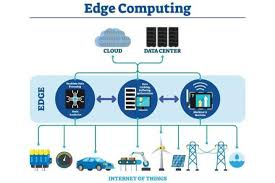
Edge computing is a distributed computing model in which data is processed closer to the “edge” of the network, meaning near the devices or sensors that generate the data. Instead of sending all information to a centralized cloud server, edge devices perform computation locally and only send necessary or summarized data to the cloud.
This approach reduces the distance that data must travel, which significantly improves speed and reduces network congestion. It is especially useful in applications where real-time processing is critical, such as autonomous driving, industrial automation, and healthcare monitoring systems.
How Edge Computing Works
Edge computing works by deploying small-scale computing resources such as edge servers, gateways, or even smart devices at the edge of the network. These devices collect data from sensors, cameras, or machines and process it locally using built-in computing power or connected micro data centers.
Once the data is processed, only relevant insights or results are transmitted to centralized cloud systems for storage or further analysis. This reduces the load on cloud infrastructure and ensures faster response times. In many cases, artificial intelligence models are also deployed at the edge to enable real-time decision-making without waiting for cloud communication.
Key Features of Edge Computing
One of the most important features of edge computing is low latency, which allows systems to respond almost instantly to real-world events. This is critical in applications such as self-driving cars, where even a small delay can have serious consequences.
Another key feature is bandwidth optimization, as edge computing reduces the amount of data that needs to be transmitted to central servers. It also improves reliability because local processing can continue even if the connection to the cloud is temporarily lost.
Edge computing also enhances privacy and security by keeping sensitive data closer to its source, reducing exposure to external networks.
Applications of Edge Computing
Edge computing is widely used in modern technologies that require real-time processing. In smart cities, it is used for traffic management, surveillance systems, and energy optimization. Sensors placed throughout the city collect data that is processed locally to make instant decisions, such as adjusting traffic signals or detecting emergencies.
In healthcare, edge computing enables real-time patient monitoring through wearable devices that analyze vital signs and alert doctors immediately in case of abnormalities. In industrial environments, it supports automation by monitoring machines and predicting failures before they occur.
Autonomous vehicles also heavily rely on edge computing to process sensor data instantly, allowing them to make quick driving decisions without waiting for cloud responses.
Benefits of Edge Computing
Edge computing offers several significant benefits, including faster data processing, reduced latency, and improved system efficiency. By processing data locally, it enables real-time responses that are essential for critical applications.
It also reduces dependency on centralized cloud systems, which helps in minimizing network congestion and lowering operational costs. Additionally, edge computing improves reliability because systems can continue functioning even during internet outages.
Another major benefit is enhanced data privacy, as sensitive information can be processed locally without being transmitted over long distances.
Challenges of Edge Computing
Despite its advantages, edge computing also faces several challenges. One of the main challenges is limited processing power at edge devices compared to centralized cloud servers. This can restrict the complexity of tasks that can be performed locally.
Another challenge is security, as distributing computing across multiple devices increases the number of potential attack https://gavangtv.llc/. Managing and maintaining a large number of edge devices can also be complex and costly.
Integration with existing cloud infrastructure is another challenge, as organizations need to balance workloads between edge and cloud environments effectively.
Future of Edge Computing
The future of edge computing is closely linked with the growth of artificial intelligence, 5G and 6G networks, and IoT ecosystems. As internet speeds increase and devices become smarter, edge computing will become even more powerful and widely adopted.
In the coming years, we can expect fully autonomous systems powered by edge AI, where decisions are made instantly without human intervention. Smart gavangtv, intelligent transportation systems, and advanced healthcare networks will heavily depend on edge computing for real-time operations.
Edge computing will also play a key role in supporting immersive technologies such as augmented reality and virtual reality by reducing latency and improving performance.
Conclusion
Edge computing represents a major shift in the way data is processed and managed in modern technology systems. By bringing computation closer to the source of data, it enables faster, more efficient, and more reliable digital services.
Although challenges such as security and hardware limitations exist, continuous advancements in networking and artificial intelligence are making edge computing more powerful and scalable. In the future, it will become a fundamental part of global digital infrastructure.
As technology continues to evolve, edge computing will play a central role in enabling real-time intelligence across industries and shaping the future of connected systems.
