

When it comes to streaming television through IPTV services, one of the most important decisions is how your device connects to the internet. Many users focus on choosing the right IPTV provider, selecting channels, or finding the best streaming device, but the connection method often has a major impact on performance. Whether you are watching live sports, movies, news, or on-demand content through IPTV Canadian, your viewing experience can depend heavily on the stability and speed of your network connection.
The debate between Ethernet and Wi-Fi continues because both technologies offer unique advantages. Ethernet provides a direct wired connection to your router, while Wi-Fi offers the convenience of wireless access throughout your home. Understanding the strengths and weaknesses of each option can help IPTV users reduce buffering, improve picture quality, and enjoy uninterrupted entertainment. This guide explains how Ethernet and Wi-Fi compare for IPTV streaming and which option may be the better choice for different situations.
What Is Ethernet and How Does It Work for IPTV?
Ethernet is a wired networking technology that connects devices directly to a router or modem using a network cable. This type of connection has been widely used for decades because it delivers stable data transmission with minimal interference. For IPTV users, Ethernet creates a direct communication path between the internet source and the streaming device, helping ensure a reliable flow of video data.
When streaming IPTV content through Ethernet, users often experience fewer connection drops and more consistent performance. Since the connection is not affected by walls, electronic devices, or wireless congestion, the signal remains strong throughout the viewing session. This makes Ethernet particularly useful for high-definition and 4K IPTV streaming, where a steady connection is essential for maintaining picture quality and avoiding buffering issues.
Understanding Wi-Fi for IPTV Streaming
Wi-Fi allows devices to connect to the internet without physical cables. Instead, data is transmitted through radio signals from a wireless router. This convenience has made Wi-Fi the most common internet connection method in modern homes. IPTV users can stream content on smart TVs, smartphones, tablets, and streaming boxes without needing to run cables across rooms.
While Wi-Fi offers flexibility, its performance can vary depending on several factors. Distance from the router, building materials, signal interference, and the number of connected devices can all affect connection quality. For IPTV streaming, these variables may sometimes result in buffering, reduced video quality, or temporary interruptions. However, modern Wi-Fi standards have significantly improved speeds and reliability, making wireless streaming a practical option for many households.
Speed and Performance Comparison
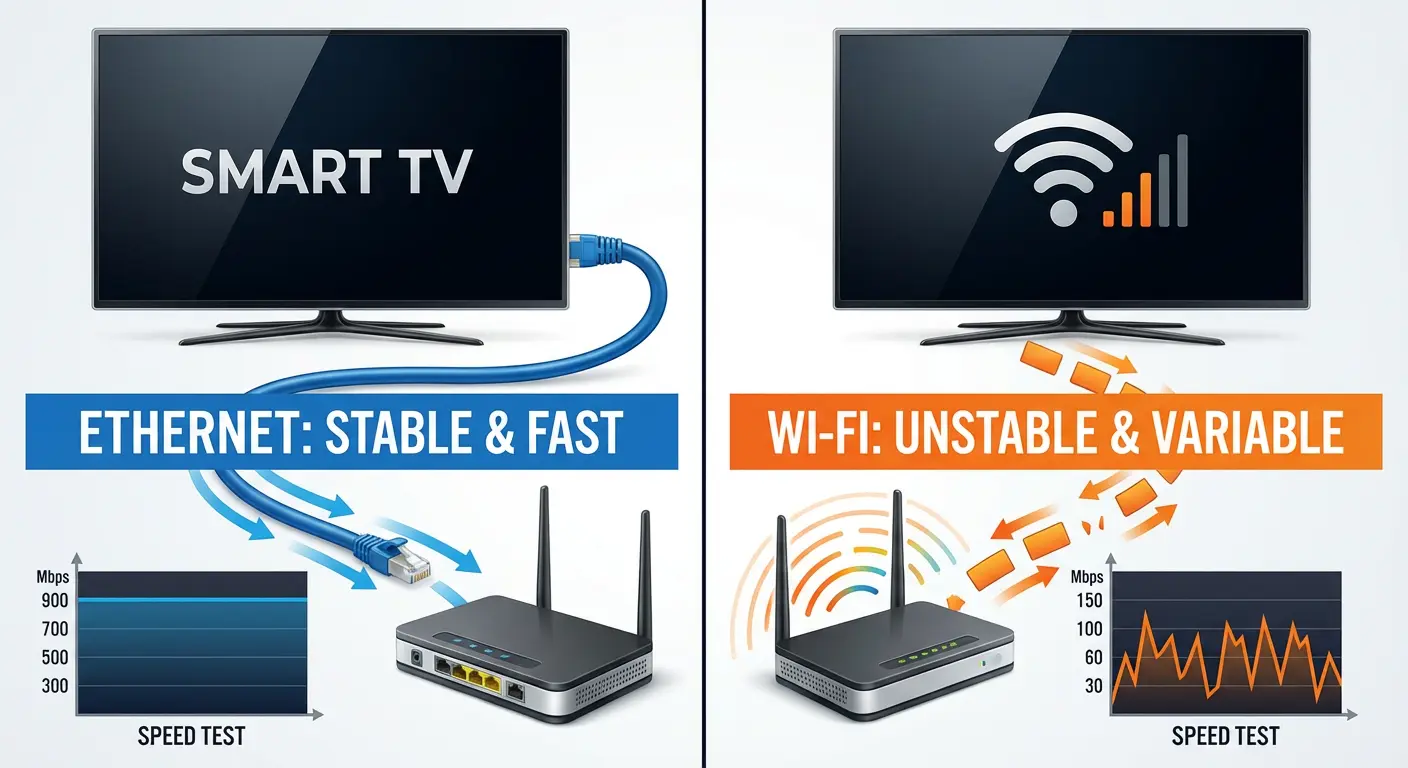
One of the biggest differences between Ethernet and Wi-Fi is consistency. Ethernet connections generally provide more predictable performance because they are not subject to wireless interference. Even when multiple devices are using the network, Ethernet often maintains stable speeds that support IPTV streaming without noticeable slowdowns.
Wi-Fi can offer impressive speeds as well, especially with newer technologies such as Wi-Fi 6 and Wi-Fi 7. In ideal conditions, wireless networks may easily handle HD and 4K IPTV streams. However, real-world environments are rarely perfect. Obstacles, competing wireless networks, and household electronics can reduce signal quality. For IPTV viewers who prioritize smooth playback during live events or premium streaming sessions, Ethernet usually delivers a more dependable experience.
Reliability and Buffering Issues
Buffering is one of the most frustrating problems IPTV users encounter. It occurs when video data cannot reach the streaming device quickly enough to maintain continuous playback. Ethernet helps reduce this risk because the connection remains stable and direct. As a result, IPTV users often experience fewer pauses and interruptions while watching their favorite programs.
Wi-Fi users may occasionally encounter buffering due to fluctuating signal strength or network congestion. This does not mean Wi-Fi is unsuitable for IPTV, but it does require proper setup and optimization. Positioning the router centrally, reducing interference, and using updated networking equipment can improve wireless performance significantly. For users who experience regular buffering, switching from Wi-Fi to Ethernet is often one of the most effective solutions.
Installation, Convenience, and Flexibility
One reason Wi-Fi remains so popular is convenience. Most devices connect wirelessly within minutes, eliminating the need for additional cables. This flexibility allows IPTV users to stream content from different rooms without modifying their home network setup. Families with multiple streaming devices often appreciate the freedom that wireless connectivity provides.
Ethernet requires physical cabling, which can be less convenient in larger homes or apartments. Running cables through walls or across rooms may not always be practical. However, once installed, Ethernet typically requires very little maintenance and delivers long-term reliability. Users who have a dedicated IPTV setup near their router often find that the small effort required for installation is worthwhile because of the improved streaming performance.
Which Option Is Better for IPTV Canadian Users?
For IPTV Canadian customers, the best choice depends on individual viewing habits and network conditions. Users who regularly watch live sports, premium channels, or 4K content may benefit greatly from Ethernet. The stable connection helps maintain consistent picture quality and minimizes the likelihood of interruptions during important broadcasts.
On the other hand, Wi-Fi may be perfectly adequate for casual viewers with strong wireless coverage throughout their home. Modern routers can support multiple simultaneous IPTV streams with excellent results. Users who value mobility and simplicity may prefer Wi-Fi, especially if their streaming devices are located far from the router. This page gives readers a useful place to continue. Ultimately, evaluating your home network environment is the best way to determine which connection method aligns with your IPTV needs.
Tips for Getting the Best IPTV Streaming Experience
Regardless of whether you choose Ethernet or Wi-Fi, optimizing your network can improve IPTV performance. A high-quality router, sufficient internet speed, and regular firmware updates all contribute to a smoother streaming experience. IPTV users should also limit unnecessary bandwidth usage during peak viewing times to ensure consistent playback quality.
For Ethernet users, using modern network cables and connecting directly to the router can maximize performance. Wi-Fi users should place the router in an open location, avoid signal obstructions, and consider upgrading to newer wireless standards if available. By combining a reliable IPTV service such as IPTV Canadian with a properly optimized network, viewers can enjoy clearer video, faster channel loading, and a more enjoyable entertainment experience overall.
Conclusion
The choice between Ethernet and Wi-Fi for IPTV depends largely on what matters most to the user. Ethernet offers superior reliability, stable speeds, and reduced buffering, making it an excellent option for viewers who demand the highest streaming quality. Its wired nature eliminates many common connectivity problems and provides consistent performance for HD and 4K IPTV content.
Wi-Fi, however, continues to be a strong choice because of its convenience, flexibility, and improving technology. Many households can enjoy excellent IPTV streaming through a well-configured wireless network. Whether you choose Ethernet or Wi-Fi, the goal is the same: a smooth, uninterrupted viewing experience. By understanding the advantages and limitations of each connection method, IPTV Canadian users can make informed decisions and enjoy the best possible IPTV performance in their homes.
